


FED / Uncertainty over next rate cuts: Markets tense after Powell’s announcement
The latest interest rate cut by the Federal Reserve (Fed) rattles markets and raises questions about upcoming monetary-policy moves: here’s what’s really going on.
Introduction: a decision under the spotlight
Last evening marked a new turning point in global monetary policy strategies: the Fed decided to implement an interest-rate cut of 25 basis points. The announcement — anticipated by markets but accompanied by cautiously-toned comments from Chair Jerome Powell — immediately triggered a wave of reactions both in financial circles and in the international political debate.
The reduction in rates (keyword: fed rate cut) comes in a complex economic context, characterised by mixed macro-data and uncertainty over growth. The open question is simple yet fundamental: what will happen in the months ahead? Powell’s emphasis on uncertainty and the drop to a 70 % probability of a further cut in December have fuelled new speculation about the future trajectory of U.S. monetary policy. In this in-depth analysis we explore the reasons behind the Fed’s latest choices, the market reaction, and the short- and medium-term outlook.
The Fed cuts rates: context and motivations
When the world’s most influential central bank acts on interest rates, the impact is global. The Fed’s choice to cut rates by 25 basis points at the end of October 2025 (keyword: federal reserve October 2025) stems from the need to support American economic growth, which has appeared slower than early-year forecasts. Signals of moderation in industrial production and inflation struggling to reach the 2 % target convinced many analysts of the need for monetary easing.
This reduction brings Fed interest rates to more accommodative levels, but not fully expansionary. It is the third cut within this year, in an attempt to prevent a possible recession and rebalance the effects of prior rate hikes. Notably, this move follows a phase of rising pressure from investors and the White House, motivated by increased international trade tensions and global macro-uncertainties.
Powell reiterated that the Fed remains ready to act further if necessary, but — and here lies the uncertainty — he placed clear limits on the assumption that the cycle of cuts is destined automatically to continue in the coming months.
Powell’s statements and the financial-markets reaction
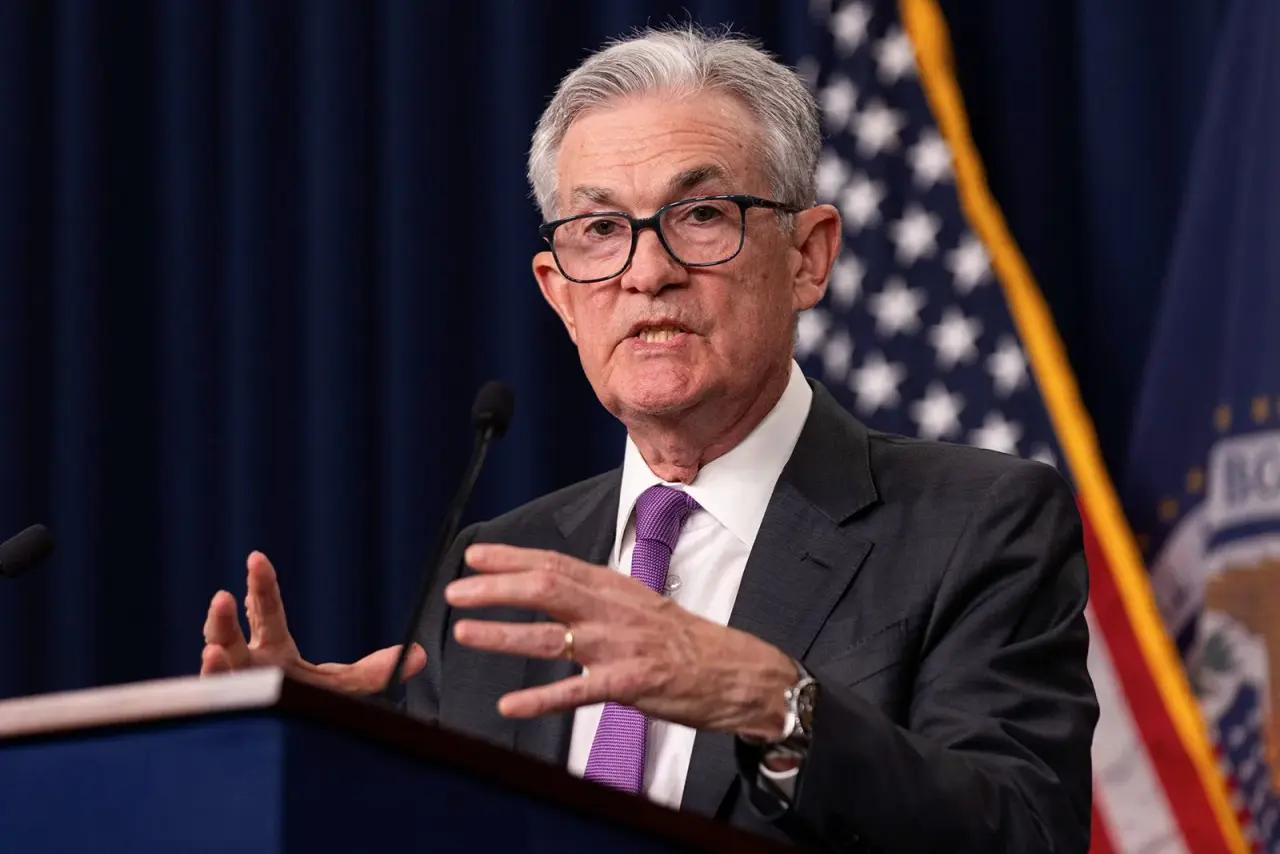
The press conference following the announcement of the cut was watched very closely by financial-markets participants. During his remarks, Chair Powell dampened expectations of an indefinitely accommodative policy, stating:
“We will closely evaluate the macro-data in the coming weeks before making new decisions. Today’s cut does not necessarily imply further reductions in the near term.”
These words had an immediate impact on U.S. stock markets (keywords: stock-markets Fed reaction). Wall Street, which had opened the session with moderate optimism on the back of hopes of a continuous cut, reversed course after Powell’s remarks. The S&P 500, Dow Jones and Nasdaq closed in negative territory, reflecting investors’ high sensitivity to the Fed’s indications.
The immediate effect: from Wall Street to global markets
Beyond the U.S. stock exchanges, international financial markets also felt the effects of the new Fed monetary-policy stance for 2025. Uncertainty over future decisions, combined with deliberately cautious communication, fuelled volatility in currencies, bonds and commodities.
The U.S. dollar showed an initial phase of weakness, only to recover after Powell’s more bullish tone.
The bond-market sector recorded immediate adjustments in yields, particularly in short-term maturities.
Emerging markets suffered new pressures, especially countries heavily exposed to U.S. capital-flow shifts.
This complex scenario highlights how crucial expectations of the next Fed rate cuts are — and how they quickly influence global investors’ operations.
The Fed’s balance sheet: what changes from December 2025
No less significant is the news — somewhat overshadowed by the rate cut – about the Fed’s balance sheet. Beginning 1 December 2025, the gradual reduction of the Fed’s balance sheet will be halted (keyword: Fed balance sheet December 2025). This aspect, often overlooked in public debate, has a fundamental impact on overall financial conditions.
In the post-2008-crisis years, the Fed purchased a large amount of U.S. government bonds and mortgage-backed securities to support the financial system, greatly expanding its balance sheet. From 2018 onward a gradual policy of contraction (quantitative tightening) had started, which is now being made less stringent.
The decision to stop shrinking the balance sheet is interpreted by analysts as a signal of caution toward the risks that an excessive liquidity drain could create in a phase of economic vulnerability.
Next cuts: forecasts and downward-revised probabilities
Until a few days ago, the probability of a further Fed rate cut at the December meeting was judged above 80 %. After Powell’s comments, that estimate has fallen to 70 % (keywords: December Fed rate-cut forecasts). Although still high, this number denotes a clear change in investors’ perception.
Many market participants are now questioning the actual conditions that would justify a new expansionary action by the Fed. The forthcoming macro-data (employment, inflation, confidence indicators) will be decisive in redefining the framework. Moreover, Powell himself emphasised that the Fed remains “data-dependent”: each decision will be made in light of concrete developments in the economic situation, without promises or automatisms. This approach reinforces the element of uncertainty and forces analysts and operators to continually revise their scenarios.
The strategic importance of the Fed: impacts on credit and savings
A rate-cut, even a modest one, has repercussions across many sectors of the real economy. By lowering cost of credit, the Fed aims to stimulate investment and consumption: firms and households can obtain loans on more favourable terms.
However, these choices also carry implications for savers: yields on deposits and Treasury securities become less attractive, pushing some investors toward riskier assets. In an era of heightened volatility, a poorly-predictable monetary policy amplifies risks and increases caution among savers and asset-managers.
The role of the Federal Reserve in 2025 monetary policy
The Fed remains the benchmark for the global financial system. Its decisions guide market dynamics and often anticipate or influence the choices of other major central banks (including the European Central Bank). In autumn 2025 the Fed faces difficult choices: on one hand the need to safeguard ongoing economic growth, on the other the necessity to prevent inflationary pressures from re-emerging.
Flexibility in communication and interest-rate management is one of the hallmarks of Powell’s leadership. Nevertheless the guiding lines remain cautious — and it is precisely this caution that anchors the high level of uncertainty regarding next months’ outlook.
Analysts’ reactions: contrasting opinions
Major global finance-houses are divided in their assessment of the Fed’s decision-making scope. Some consider the cuts-cycle to be over, with only a marked downturn in the economy capable of prompting new actions. Others deem at least one more cut plausible within the first half of 2026, especially if labour-market or inflation data show persistent weakness.
Here is a summary of the main positions:
Cautious approach: Don’t expect further cuts before significantly negative macro-data emerge.
Expansionary approach: The Fed could surprise with new measures if markets wobble further.
Neutrality: The Fed will proceed with high gradualism, not ruling out any option a priori.
These divergences reflect the complexity of the situation and the enormous responsibility resting on Powell and his colleagues to steer global expectations and preserve economic stability.
Variables to monitor in the coming months
The evolution of the Fed’s monetary policy will depend on numerous internal and external factors. Key data to monitor in the coming months include:
Core and headline inflation in the U.S.
Quarterly results of major companies.
Labour-market data and consumer-spending figures.
Signs of slowdown coming from Europe and China.
Geopolitical tensions and risks of systemic shocks.
Beyond economic statistics, it will be essential to observe official Fed communications and the numerous public interventions by its members, because nuances and tone can also steer operator expectations.
Final summary and future prospects
In summary, the Fed has chosen a prudent path and reserved manoeuvring room for the future. The October 2025 rate cut was accompanied by messaging intended to avoid easy enthusiasm: the message is that any future move on interest rates will depend on data and the strength of the economic backdrop.
Investors remain on hold: the probability of a new cut in December (now 70 %) keeps market tension high, while the halting of the balance-sheet reduction from 1 December is a key component in liquidity-management strategies.
Looking to the medium term, the Fed’s monetary policy remains strongly conditioned by the evolution of the global macro-economic framework. In a context of great uncertainty, the Fed’s credibility and transparency in communication will be the pillars on which investor confidence and financial stability are built.
Uncertainty, therefore, remains the true protagonist after this new intervention by the Fed. And the question of a further rate cut remains more open than ever.



Leave a comment