

Nvidia Surpasses $5 Trillion: The Unstoppable Rise Powered by the AI Boom
For the first time in the history of global finance, a technology company has reached a market capitalization of $5 trillion. Nvidia, founded over three decades ago by Jensen Huang, now stands as an unchallenged titan in the artificial intelligence revolution. The company’s stock value has soared to unprecedented heights, cementing its position as the global leader in AI hardware and software technologies. This milestone not only sets a new benchmark for investors and analysts but also invites deeper reflection on the structural transformations redefining the global economy.
Once, reaching a trillion dollars in market value was an exceptional feat achieved by only a few corporate giants such as Apple, Microsoft, and Amazon. Today, Nvidia’s valuation doubles the entire Gross Domestic Product of Italy, underscoring how the digital economy has overtaken traditional benchmarks of industrial and national wealth. It signals a new era in which innovation, data, and computing power have become the most valuable commodities in the world.
The engine behind Nvidia’s meteoric rise is the explosive growth of artificial intelligence across virtually every sector. Over the past few years, the surging demand for chips and hardware capable of powering neural networks, machine learning, and deep learning has positioned Nvidia as the essential supplier for data centers, corporations, research institutions, and even public administrations. This is not merely quantitative growth—it represents a structural shift in the innovation economy. As Large Language Models (LLMs) proliferate and the global digital infrastructure expands, Nvidia has become the cornerstone provider of the computational power driving this transformation.
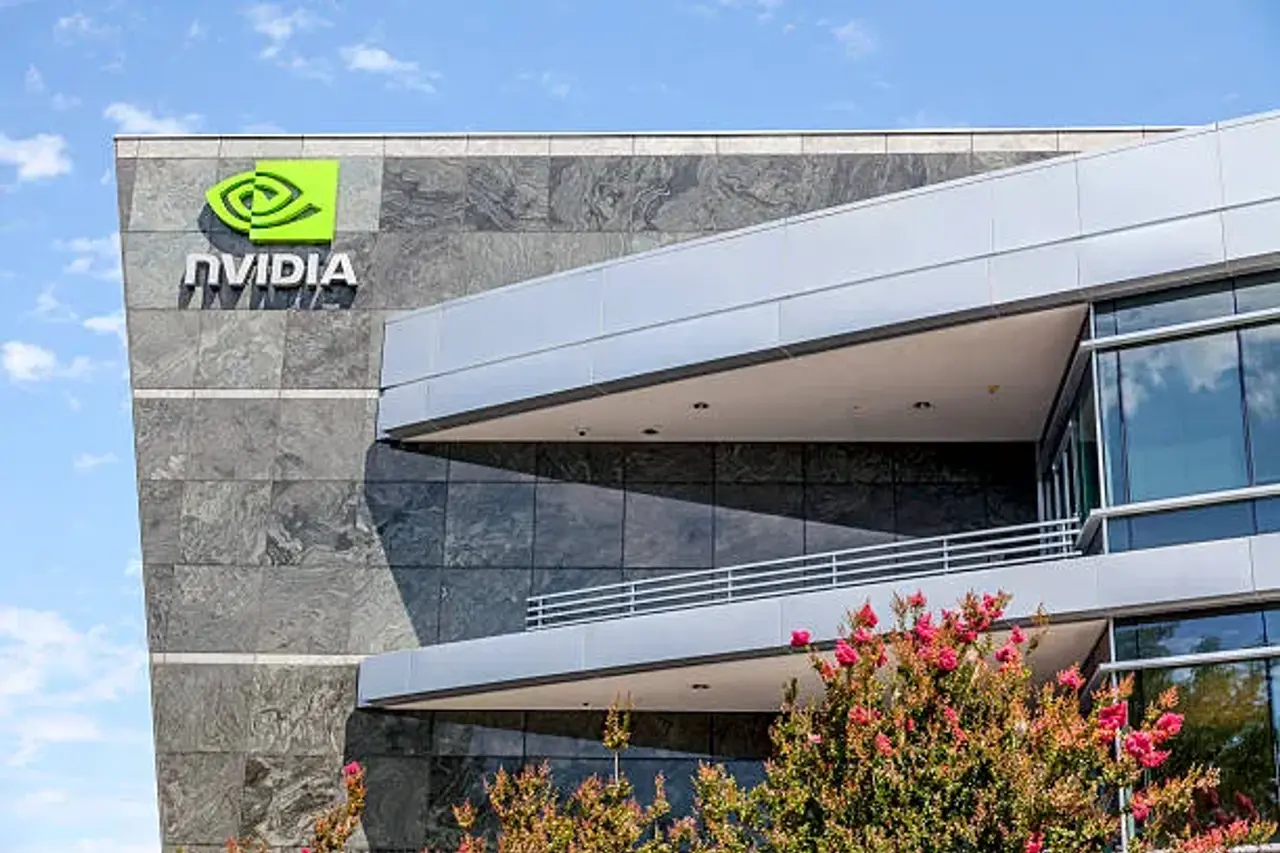
The company’s dominance stems from its ability to design, manufacture, and distribute the most advanced GPUs in existence. These technologies are the backbone of modern AI systems and the enablers of the next industrial revolution. Nvidia’s control over the market allows it to set both the pace and the price of innovation, a rare position even among the elite of Silicon Valley.
To grasp the magnitude of this achievement, consider that Nvidia’s $5 trillion market capitalization is roughly double Italy’s GDP, estimated at about $2.54 trillion in 2025. Such a comparison highlights a striking new reality: technology firms are no longer just market players—they are global powers with influence comparable to that of sovereign states. Their capacity to attract capital, shape industrial strategies, and set innovation agendas now exceeds that of many governments. This concentration of wealth and technological capability raises profound questions about digital sovereignty, data security, and geopolitical balance.
Financially, Nvidia’s performance in 2025 has been nothing short of extraordinary. Revenues have soared by 56%, reaching $46.74 billion, while net profits jumped 59% in the second quarter compared to the previous year. These numbers reflect both the surge in AI-related demand and the company’s strategic expansion into data centers, cloud computing, and enterprise-grade software. Partnerships with global cloud providers like Amazon Web Services, Microsoft Azure, and Google Cloud have further solidified its dominance. Continuous investment in research and development and targeted acquisitions have kept Nvidia ahead of the competition, ensuring sustained growth in one of the most volatile and rapidly evolving industries.
At the heart of Nvidia’s success lies its long-term vision for artificial intelligence. The company’s early and consistent investment in GPU architecture, parallel computing frameworks such as CUDA, and AI-optimized hardware has yielded a technological advantage that competitors struggle to match. Nvidia has also built a vast innovation ecosystem through partnerships with startups, research institutes, and universities. By nurturing this network, the company has positioned itself not just as a producer of chips, but as the foundation of the global AI infrastructure.
Yet, not everything has been smooth sailing. In 2025, U.S. export restrictions effectively excluded Nvidia from the Chinese market, one of the world’s most lucrative for semiconductors. The move, driven by national security concerns and the desire to maintain a technological edge over Beijing, posed a major challenge. However, Nvidia successfully offset these losses through aggressive expansion in the United States, Europe, the Middle East, and Southeast Asia. Its diversified geographic strategy has proven vital in reducing exposure to political risk and ensuring stable revenue streams amid increasing global tension.
Nvidia’s rise must also be seen within the broader context of the tech sector’s rally. Companies like Apple, Microsoft, Alphabet, and Amazon have all achieved trillion-dollar valuations, but none have matched Nvidia’s speed or scale of growth. The AI revolution has introduced new expectations among investors, leading to record-high price-to-earnings ratios and sparking debates about the potential for a speculative bubble. While some analysts warn of overheating, Nvidia’s enduring innovation and solid customer base provide resilience against short-term volatility.
The company’s ascent reflects a deeper transformation in the global economy: the shift toward digital infrastructure as the backbone of modern productivity. As AI becomes embedded in everything from medicine to mobility, Nvidia stands at the center of a paradigm shift that will shape industries and societies for decades to come. Questions remain about the sustainability of this growth, the risks of excessive market concentration, and the need for stronger regulatory oversight. Yet, the direction is clear—artificial intelligence is now the driving force of global capitalism.
In conclusion, Nvidia’s record-breaking valuation is far more than a financial milestone. It marks a defining moment in the technological and economic history of the 21st century. Propelled by the AI boom and extraordinary financial performance, the company has reshaped the landscape of innovation and investment. Despite geopolitical headwinds, Nvidia continues to exceed expectations and inspire the entire tech industry. Its story is both a triumph of vision and a challenge to policymakers and competitors worldwide: in the age of artificial intelligence, the balance of power no longer lies in oil, steel, or currency—but in computation.